Endodontics (Root Canal Treatment)
Root canal treatment for infected or damaged teeth at Neovadent in Kırklareli, Turkey. Individual assessment focused on preserving natural teeth.
Endodontics (Root Canal Treatment)
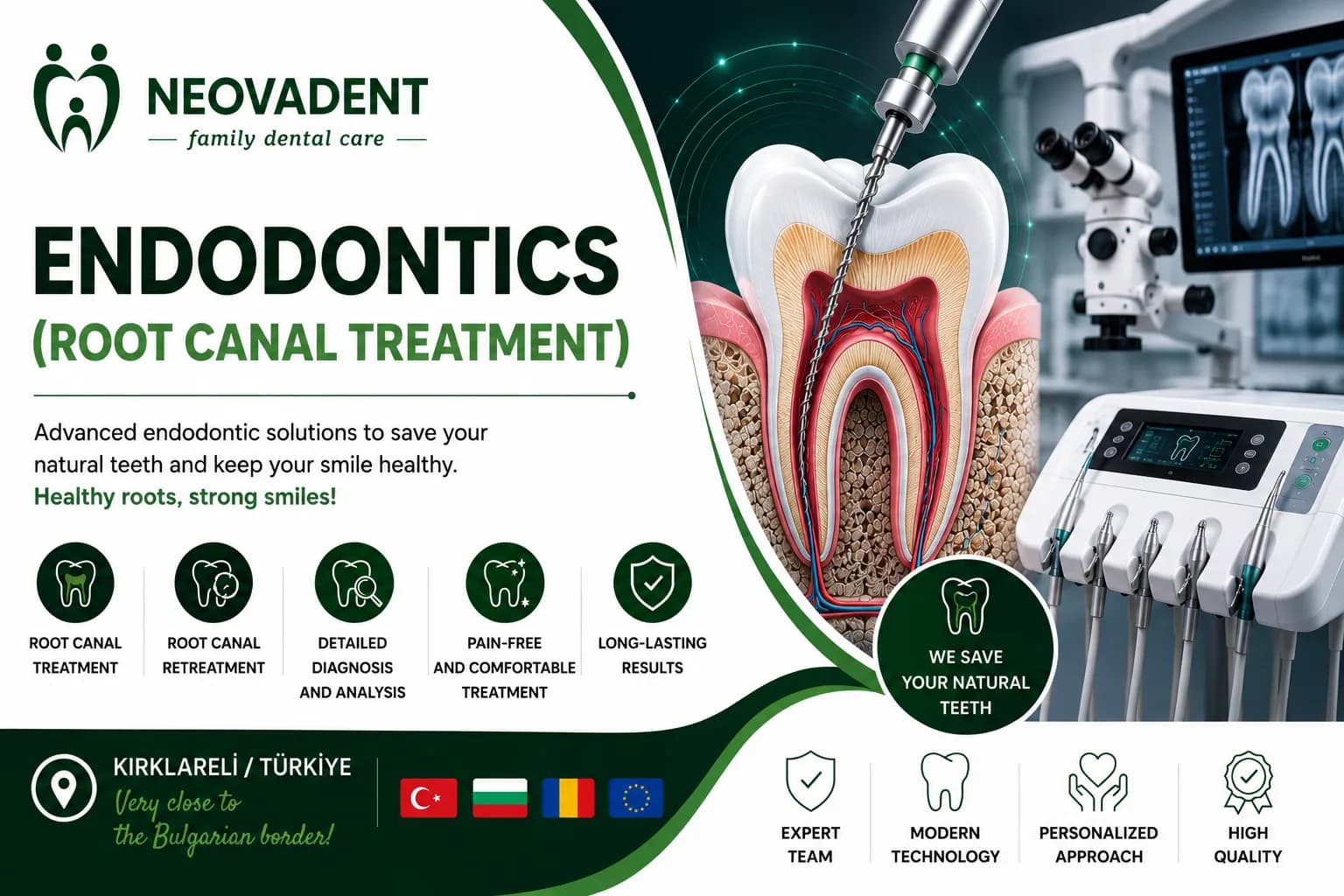
Endodontics is a field of dentistry concerned with the diagnosis and treatment of conditions affecting the dental pulp, tooth roots and root canal system. It is most commonly associated with root canal treatment.
Deep decay, dental trauma, cracks or fractures may cause the tissue inside a tooth to become irreversibly damaged or infected. In suitable cases, root canal treatment aims to remove affected tissue, control infection and preserve the natural tooth.
At Neovadent Dental Clinic in Kırklareli, the condition of the tooth, root canal anatomy and surrounding tissues are individually evaluated before treatment is planned.
What Does Endodontics Include?
Endodontic care may include:
Root canal treatment
Root canal retreatment
Diagnosis of dental pulp conditions
Assessment of deep dental decay
Management of pulp and root problems following dental trauma
Evaluation of infections around the root tip
Follow-up after root canal treatment
Other endodontic procedures where clinically appropriate
The appropriate treatment is determined following clinical examination and necessary diagnostic imaging.
What Is Root Canal Treatment?
Root canal treatment involves removing infected or irreversibly damaged pulp tissue from inside the tooth. The root canals are then cleaned, shaped, disinfected and filled with appropriate materials.
The main objective is to help control infection and preserve the natural tooth whenever clinically possible.
After root canal treatment, a filling, onlay or dental crown may be necessary depending on the amount of healthy tooth structure remaining.
When May Root Canal Treatment Be Necessary?
Root canal treatment may be considered in cases involving:
Deep tooth decay
Severe or persistent toothache
Prolonged sensitivity to hot or cold
Pain when biting or chewing
Swelling around a tooth
Infection around the tooth root
Damage caused by dental trauma
Cracked or fractured teeth
These symptoms do not automatically mean that root canal treatment is required. A diagnosis should be established through clinical and, where necessary, radiographic assessment.
How Is Root Canal Treatment Performed?
Following clinical examination and necessary diagnostic imaging, treatment is generally carried out under local anaesthesia. Access is created to reach the root canal system.
Affected tissue is removed, and the canals are cleaned, shaped and disinfected before being filled with appropriate materials.
Depending on the extent of infection, tooth anatomy and other clinical factors, treatment may be completed in one or multiple appointments.
Is Root Canal Treatment Painful?
Root canal treatment is generally performed under local anaesthesia with the aim of preventing pain during the procedure.
Temporary tenderness or mild discomfort may occur for several days after treatment. The duration and intensity can vary according to the individual patient and the condition of the treated tooth.
How Long Can a Root Canal-Treated Tooth Last?
A successfully treated tooth that is appropriately restored and regularly monitored may remain functional for many years. However, it is not possible to guarantee an exact lifespan.
The amount of remaining healthy tooth structure, the quality of the final restoration, oral hygiene, chewing forces and regular dental examinations may all affect long-term outcomes.
Can Root Canal Treatment Be Repeated?
If a previously treated tooth develops a new infection or the original treatment does not adequately resolve the problem, root canal retreatment may be considered in suitable cases.
Not every tooth is suitable for retreatment. The decision depends on clinical and radiographic findings.
Endodontics at Neovadent in Kırklareli, Turkey
At Neovadent Dental Clinic, endodontic treatment is planned according to the individual patient's clinical condition and the characteristics of the affected tooth.
Our aim is to preserve the natural tooth whenever this is clinically appropriate and contribute to maintaining long-term oral health.
Frequently Asked Questions
1. What is root canal treatment?
Root canal treatment is a procedure in which infected or irreversibly damaged pulp tissue is removed, and the root canals are cleaned, disinfected and filled with appropriate materials.
2. Is root canal treatment painful?
The procedure is generally performed under local anaesthesia. Temporary sensitivity or mild discomfort may occur after treatment.
3. How many appointments does root canal treatment require?
Some treatments may be completed in a single appointment, while others may require multiple visits depending on the infection, root canal anatomy and other clinical factors.
4. Can a tooth hurt after root canal treatment?
Yes. Temporary tenderness can occur after the procedure. Persistent or severe pain should be professionally evaluated.
5. Can a tooth be extracted instead of having root canal treatment?
In some cases, extraction may be an option. When the natural tooth can be predictably preserved, endodontic treatment may be considered.
6. Is a dental crown necessary after root canal treatment?
Not in every case. The need for a crown depends on the remaining healthy tooth structure, the position of the tooth and the chewing forces placed upon it.
7. Can an old root canal treatment be repeated?
Yes. Root canal retreatment may be possible in suitable cases where a previously treated tooth has developed a new problem.
8. What should I do after root canal treatment?
Follow your dentist's recommendations, maintain good oral hygiene and avoid excessive chewing pressure on the treated tooth until the definitive restoration has been completed.
Other services
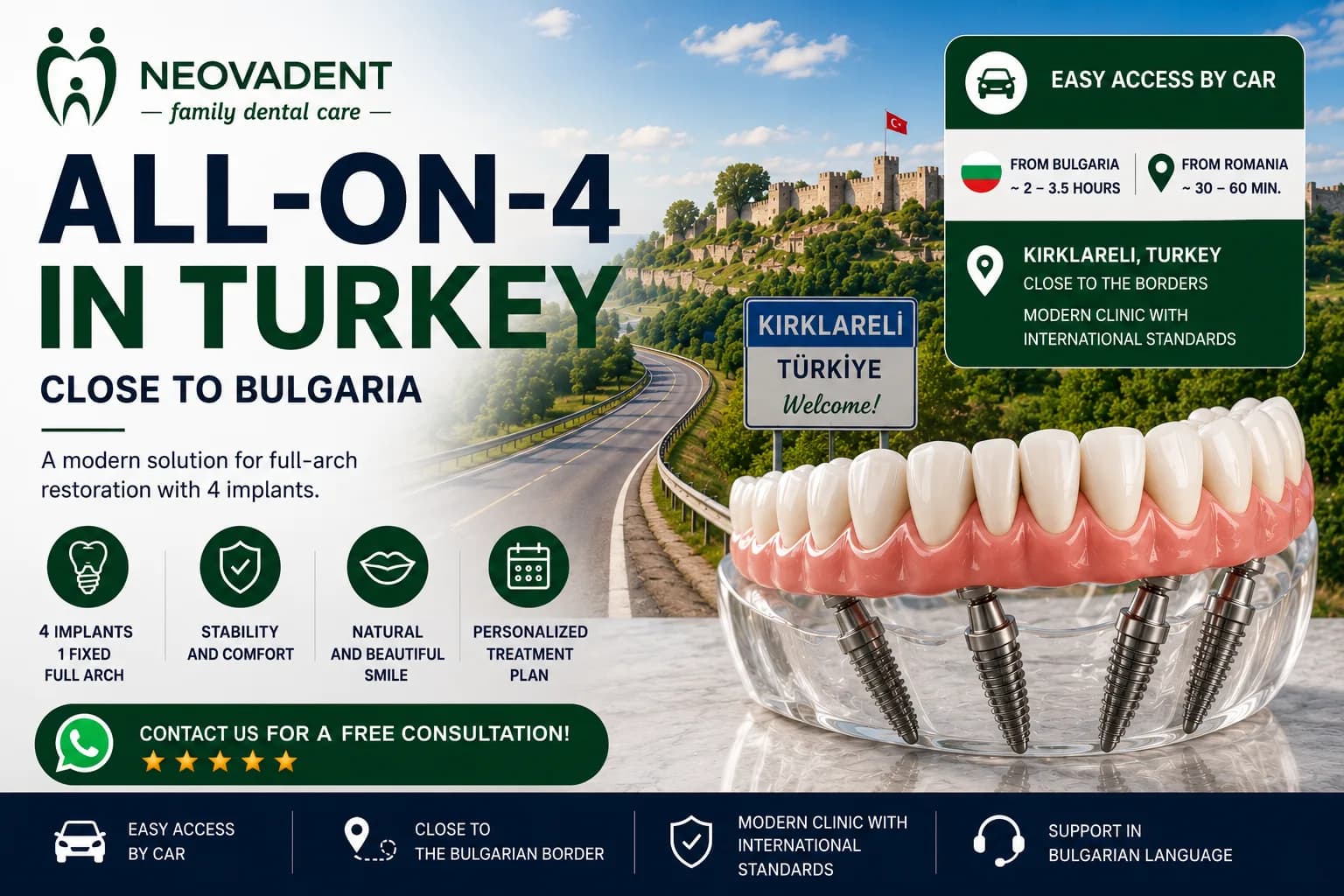
All-on-4 in Turkey | Near Bulgaria & Romania | Neovadent
Discover All-on-4 treatment in Turkey at Neovadent, Kırklareli. Modern digital dentistry, personalized treatment plans, and convenient access from Bulgaria and Romania.

Dental Implants in Turkey Near Bulgaria | Neovadent
Looking for dental implants in Turkey? Neovadent offers modern implant treatments in Kırklareli with convenient access from Bulgaria and Romania.
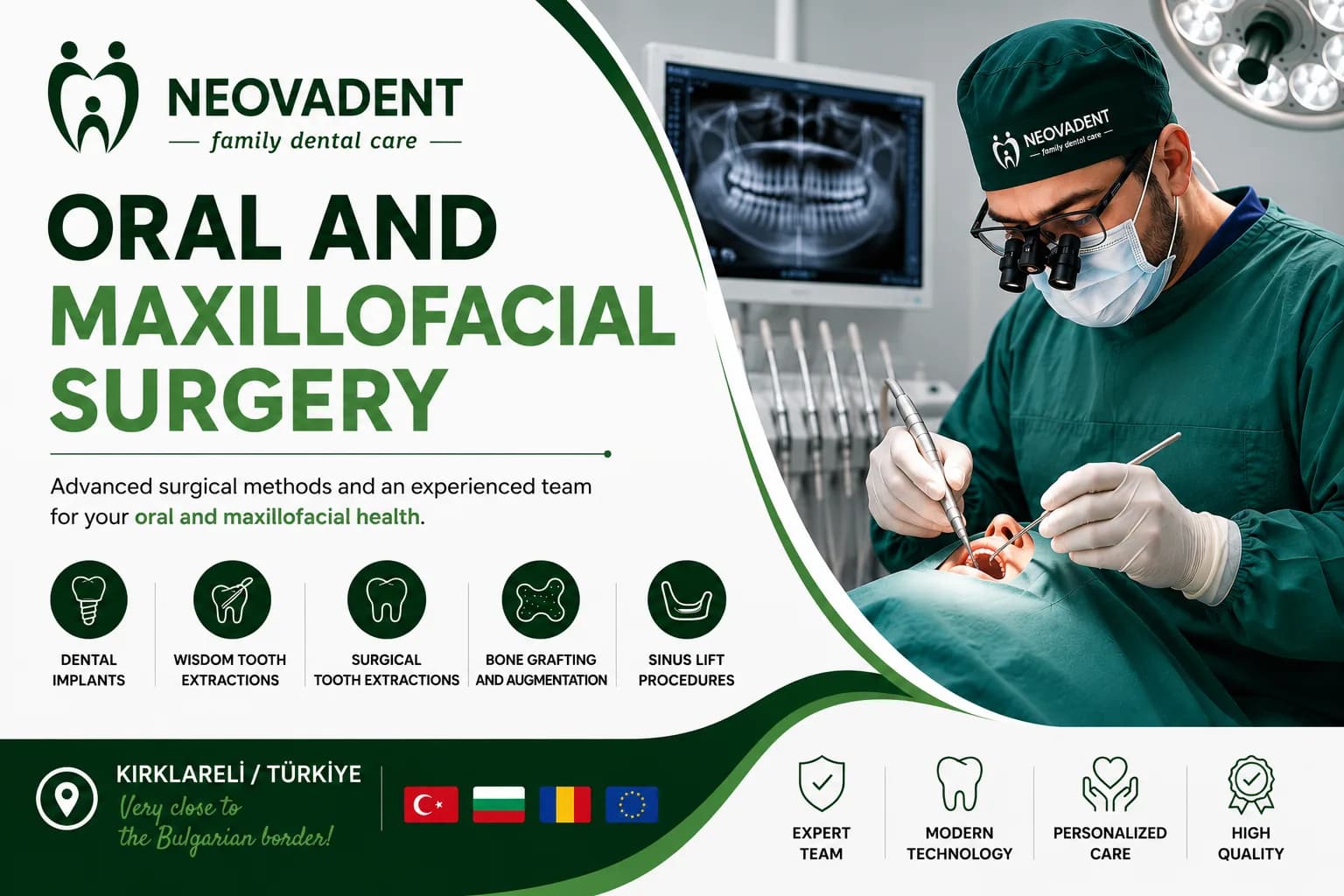
Oral and Maxillofacial Surgery
Oral surgery, dental implants and impacted wisdom tooth removal at Neovadent in Kırklareli, Turkey. Individual treatment planning for every patient.