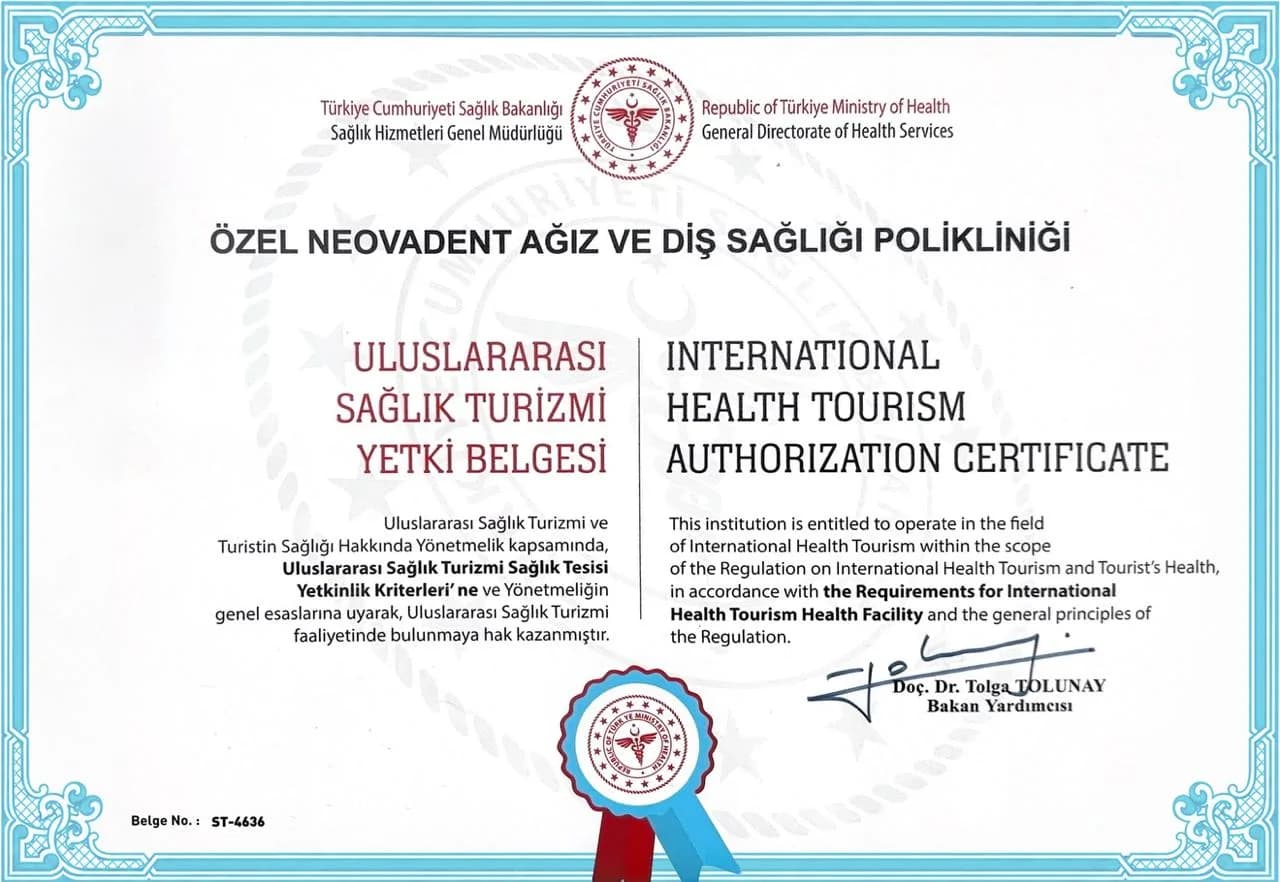
Restorative Dentistry
Personalized restorative treatment for decayed, fractured or worn teeth at Neovadent Dental Clinic in Kirklareli, Türkiye.
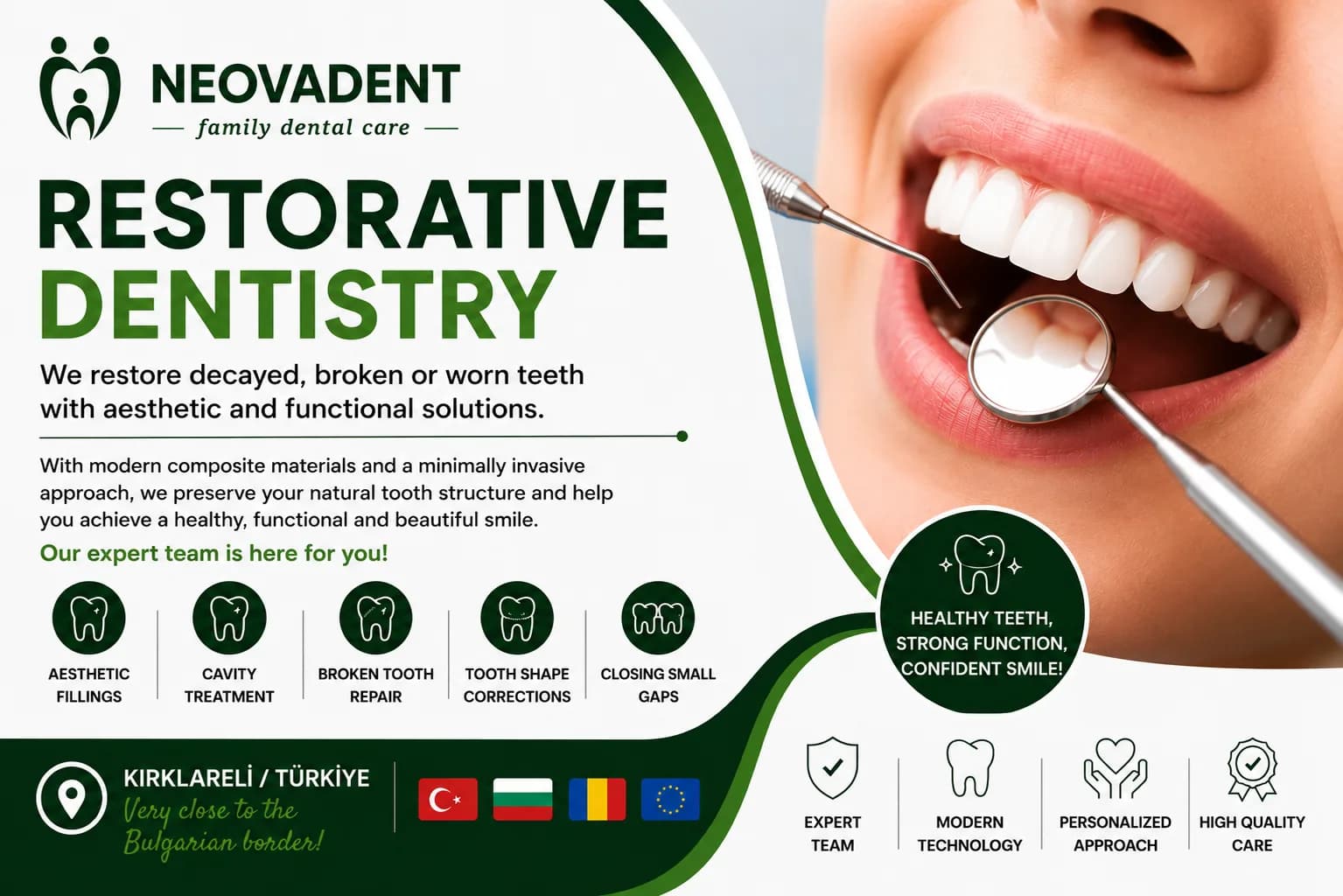
Restorative Dentistry
Dental decay, fractures, wear and loss of tooth structure caused by different factors can affect both oral health and the appearance of the smile. Restorative dentistry aims to restore the shape, function and aesthetics of damaged teeth while preserving as much healthy natural tooth structure as possible.
Modern restorative dentistry involves more than simply removing decay and filling the resulting cavity. The natural anatomy of the tooth, its color, relationship with neighboring teeth and bite are evaluated together so that the restoration can integrate as naturally and harmoniously as possible.
At Neovadent Dental Clinic, different restorative options ranging from the treatment of dental decay and aesthetic composite restorations to the repair of fractured or worn teeth and dental bonding are evaluated according to each patient's individual needs.
Our primary approach to treatment planning is to preserve healthy natural tooth structure whenever possible, restore dental function and achieve a natural aesthetic appearance.
⭐ Highlights
📍 Location: Neovadent Dental Clinic – Kirklareli / Türkiye
🦷 Specialty: Restorative Dentistry
✨ Aesthetic Restorations: Tooth-colored composite materials
🦷 Tooth Decay Treatment: Removal of damaged tissue and restoration of the tooth
💎 Dental Bonding: Correction of tooth shape and minor aesthetic irregularities in suitable cases
🔎 Personalized Planning: Treatment according to tooth structure, bite and aesthetic expectations
🌿 Conservative Approach: Preservation of healthy natural tooth structure whenever possible
🌍 International Patients: Convenient road access from Bulgaria and Romania
📋 What Is Restorative Dentistry?
Restorative dentistry is the field of dentistry concerned with repairing teeth that have lost part of their structure due to decay, fractures, wear, trauma or other causes.
After the affected part of the tooth has been appropriately treated, the lost dental structure can be rebuilt using restorative materials selected according to clinical requirements.
The purpose of a restoration is not simply to cover or fill the damaged area. The tooth's natural anatomy, contact points, relationship with neighboring teeth and bite against the opposing teeth are also considered.
In restorations involving the front teeth, color, translucency, surface texture and tooth shape are particularly important for achieving a harmonious aesthetic result.
For posterior teeth, resistance to chewing forces and reconstruction of natural dental anatomy are important alongside aesthetic considerations.
The scope of restorative treatment can range from repairing a small cavity with a composite filling to rebuilding a fractured or worn tooth.
When selecting the appropriate treatment, the amount of lost tooth structure, depth of decay, condition of the dental pulp, existing restorations, bite forces and the patient's aesthetic expectations are evaluated together.
👨⚕️ When Can Restorative Dental Treatment Be Recommended?
Restorative treatments can be used to repair the loss of natural tooth structure caused by different conditions.
A restorative evaluation may be recommended in situations including:
• Dental cavities
• Old or poorly adapted fillings
• Fractured teeth
• Loss of tooth structure caused by trauma
• Worn tooth surfaces
• Minor irregularities in tooth shape
• Small aesthetic imperfections affecting the front teeth
• Certain small spaces between teeth that may be corrected in suitable cases
• Localized differences in tooth color where restorative correction is being considered
• Loss of dental structure in specific areas of a tooth
• Existing composite restorations that require replacement
• Teeth where both function and aesthetics need to be restored
When the damage is too extensive to be managed with restorative methods alone, other treatments such as root canal therapy or prosthetic restorations may need to be considered.
🦷 Treatments in Restorative Dentistry
The restorative method is selected according to the type and extent of damage to the tooth.
Composite Fillings
Composite fillings are restorations made using materials that can be selected to closely match the natural color of the teeth.
They may be used to rebuild tooth structure lost due to dental decay and, in suitable cases, to repair fractured or worn areas.
During treatment, the aim is to reconstruct the natural anatomy of the tooth and restore appropriate contact with neighboring teeth.
Aesthetic Front Tooth Restorations
Small fractures, loss of tooth structure or certain irregularities in the shape of front teeth may be corrected with composite restorations.
In these areas, the color, shape, surface characteristics and harmony of the restoration with neighboring teeth are important for the aesthetic result.
The aim is for the restoration to integrate naturally with the surrounding teeth rather than drawing attention to itself.
Dental Bonding
Dental bonding is a restorative method in which tooth-colored composite material is applied to the tooth surface to modify or rebuild its shape.
In suitable cases, bonding may be used to reduce small spaces between teeth, correct certain irregularities in tooth shape or repair minor fractures.
The suitability of bonding is determined after evaluating the patient's tooth structure, bite and individual needs.
Fractured Tooth Restorations
Teeth may fracture as a result of trauma, hard foods or various other factors.
Depending on the size of the fracture and the amount of healthy tooth structure remaining, the tooth may be rebuilt with composite material in suitable cases.
For more extensive fractures, the vitality of the tooth and remaining structure are evaluated, and endodontic or prosthetic treatment may be required.
Restoration of Worn Teeth
Clenching, grinding, incorrect brushing techniques, acidic factors and other causes can gradually lead to wear of the tooth surfaces.
Treatment should address not only the replacement of lost tooth structure but also the underlying cause of the wear.
In suitable cases, the lost dental structure may be rebuilt using restorative materials.
Replacement of Existing Fillings
Existing fillings may wear, fracture or lose their adaptation to the tooth over time.
However, an old filling does not necessarily need to be replaced simply because of its age. Its marginal adaptation, presence of fractures or wear and the condition of the surrounding tooth structure are evaluated before deciding whether replacement is necessary.
When required, the existing restoration is removed, the tooth is reassessed and a new restoration is prepared using an appropriate material.
Restorative Correction of Small Gaps Between Teeth
For some patients, small spaces between the front teeth may cause aesthetic concerns.
In suitable cases, composite materials can be used to modify tooth shape and reduce or close these spaces.
The size of the gap, tooth position, dental proportions and bite relationships should be evaluated before treatment. Orthodontic treatment may be a more appropriate option in certain cases.
Minimal Aesthetic Tooth Shape Corrections
In cases where there are minor differences in the size or shape of the teeth, aesthetic corrections may be performed using composite restorative materials.
Treatment planning considers not only the individual tooth but also the smile line, neighboring teeth and overall facial harmony.
📅 Treatment Process
Restorative dental treatment begins with a detailed evaluation of the teeth and surrounding tissues. During the initial examination, the extent of decay, fracture, wear or loss of tooth structure is assessed, and existing restorations are checked.
When necessary, radiographic examinations may be used to evaluate the depth of decay, its relationship with the dental pulp and the condition of the surrounding structures.
Treatment planning aims to preserve as much healthy natural tooth structure as possible. After decayed or damaged tissue has been carefully removed, the tooth is rebuilt using an appropriate restorative material.
For composite restorations, a material shade is selected to match the natural tooth color as closely as possible. For front teeth, particular attention is given to color, shape, surface texture and optical characteristics. For posterior teeth, restoring natural anatomy and chewing function is especially important.
After the restoration is completed, contact with neighboring teeth and the patient's bite are checked. Any necessary adjustments are made before the restoration is finished and polished.
If the examination shows that the damage is too extensive to be treated with restorative methods alone, endodontic or prosthetic treatment options may be considered depending on the condition of the tooth.
Following treatment, effective daily oral hygiene and regular dental examinations are important for maintaining both the natural tooth structure and existing restorations.
⭐ Why Neovadent?
The primary goal of restorative dentistry is not simply to fill a damaged area. Our approach aims to preserve as much healthy natural tooth structure as possible while restoring the tooth's function, anatomy and aesthetic appearance.
At Neovadent Dental Clinic, each restoration is planned individually according to the patient's tooth structure, remaining healthy dental tissue, bite relationships and aesthetic expectations.
Particularly in aesthetic areas, treatment planning considers not only tooth color but also shape, surface characteristics, harmony with neighboring teeth and the overall appearance of the smile.
When dental damage extends beyond the limits of restorative treatment, multidisciplinary planning may include endodontic, periodontal or prosthetic treatment.
Our clinic in Kirklareli is located close to the Bulgarian border, providing convenient road access for patients travelling from Bulgaria. Treatment stages and necessary visits for patients travelling from Romania can also be organized according to their individual treatment plan.
❓ Frequently Asked Questions
What is a composite filling?
A composite filling is a restoration made using tooth-colored materials to rebuild dental structure lost due to decay, fracture or other forms of damage. The material shade can be selected to match the surrounding natural teeth as closely as possible.
Are white fillings and composite fillings the same thing?
In everyday use, the term “white filling” generally refers to tooth-colored composite restorations. The specific material and application technique are selected according to the condition of the tooth being treated.
When can dental bonding be used?
Dental bonding may be considered in suitable cases to repair small fractures, correct certain irregularities in tooth shape or reduce small spaces between teeth. Tooth structure and bite should be evaluated before deciding whether bonding is appropriate.
Can small fractures in front teeth be repaired with composite?
Depending on the size of the fracture and the amount of healthy tooth structure remaining, some small fractures of the front teeth can be repaired with composite restorations. More extensive fractures may require different treatment options.
Can gaps between teeth be closed with bonding?
Some small gaps can be reduced or closed with composite bonding in suitable cases. However, the size of the gap, position and proportions of the teeth and bite relationships should be evaluated. Orthodontic treatment may be more appropriate for some patients.
Can composite restorations match the color of natural teeth?
Composite materials are available in different shades and optical properties. Appropriate shade selection and application techniques aim to help the restoration blend naturally with the surrounding teeth.
Can every cavity be treated with a filling?
No. The appropriate treatment depends on the size and depth of the cavity and the amount of healthy tooth structure remaining. If decay has affected the dental pulp, root canal treatment may be required. Prosthetic restorations may be considered when extensive tooth structure has been lost.
Do all old fillings need to be replaced?
No. The age of a filling alone does not mean that it needs to be replaced. Marginal adaptation, fractures, wear, the condition of the surrounding tooth structure and other clinical findings are evaluated before making this decision.
What should I consider after restorative treatment?
Regular tooth brushing, interdental cleaning and routine dental examinations are important. Habits such as clenching or grinding that may place excessive forces on restorations should also be evaluated when present.
How long do composite restorations last?
There is no single exact lifespan that applies to every restoration. The size and location of the restoration, oral hygiene, chewing forces, clenching or grinding habits and regular dental examinations can all influence its longevity.
🔗 Related Services
• Endodontics (Root Canal Treatment)
• Prosthetic Dentistry
• Periodontology
• Orthodontics
• Oral and Maxillofacial Radiology
📞 Contact Us
If you have decayed, fractured or worn teeth, would like to have existing fillings evaluated, or would like information about aesthetic composite restorations and dental bonding, you can contact Neovadent Dental Clinic.
Following a detailed examination, your natural tooth structure, existing restorations, bite and aesthetic expectations can be evaluated together to determine restorative treatment options suited to your individual needs.
Other services
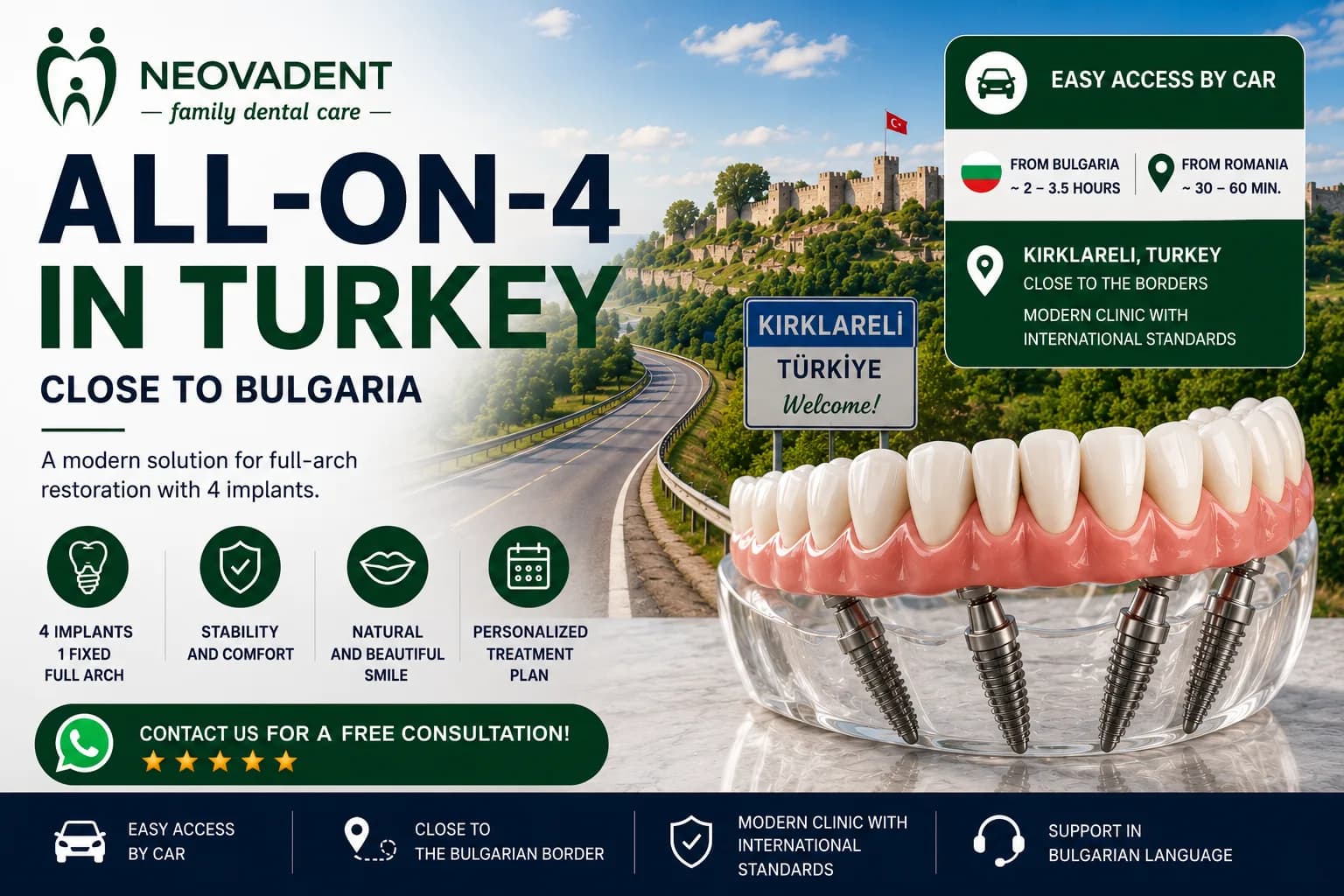
All-on-4 in Turkey | Near Bulgaria & Romania | Neovadent
Discover All-on-4 treatment in Turkey at Neovadent, Kırklareli. Modern digital dentistry, personalized treatment plans, and convenient access from Bulgaria and Romania.

Dental Implants in Turkey Near Bulgaria | Neovadent
Looking for dental implants in Turkey? Neovadent offers modern implant treatments in Kırklareli with convenient access from Bulgaria and Romania.
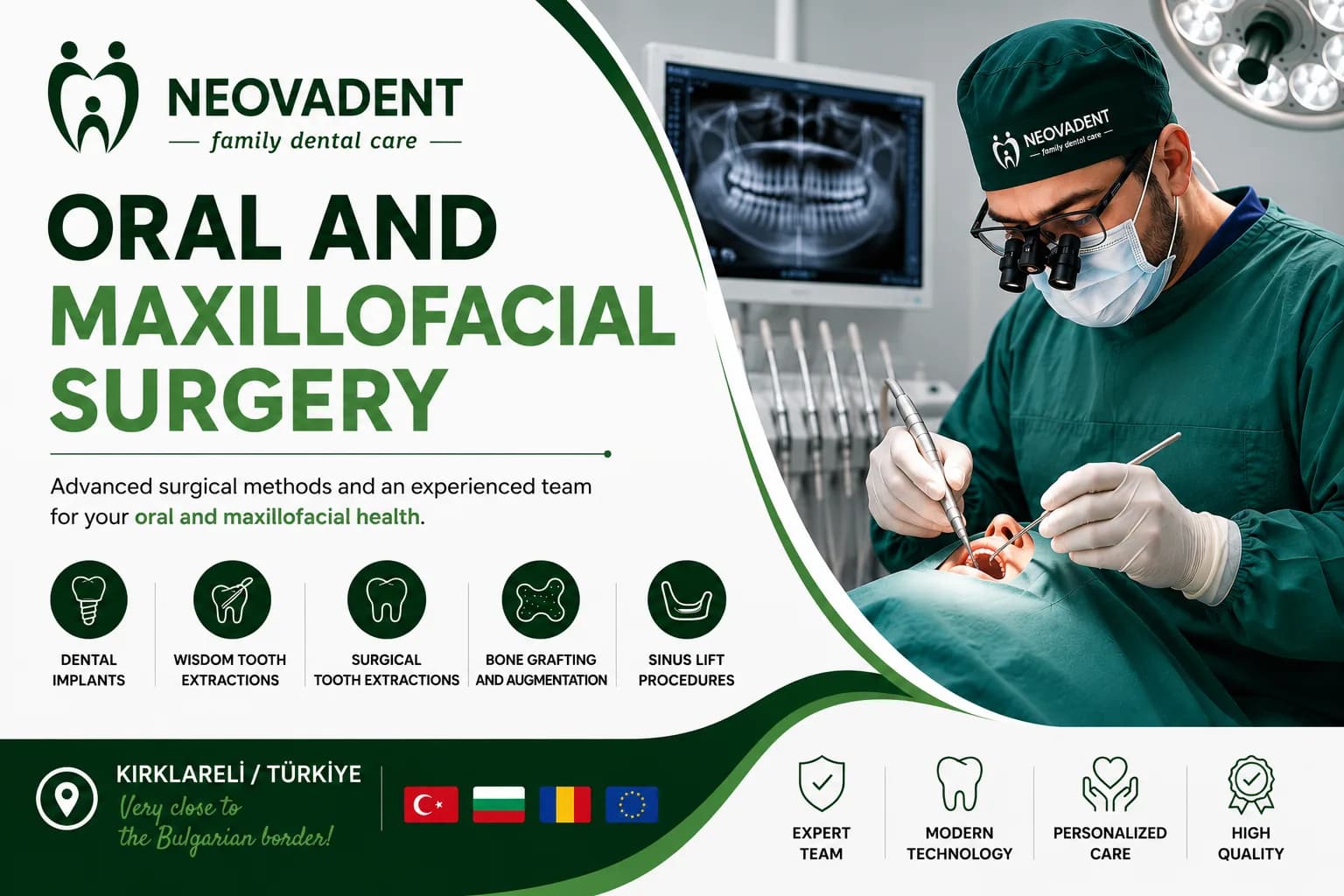
Oral and Maxillofacial Surgery
Oral surgery, dental implants and impacted wisdom tooth removal at Neovadent in Kırklareli, Turkey. Individual treatment planning for every patient.