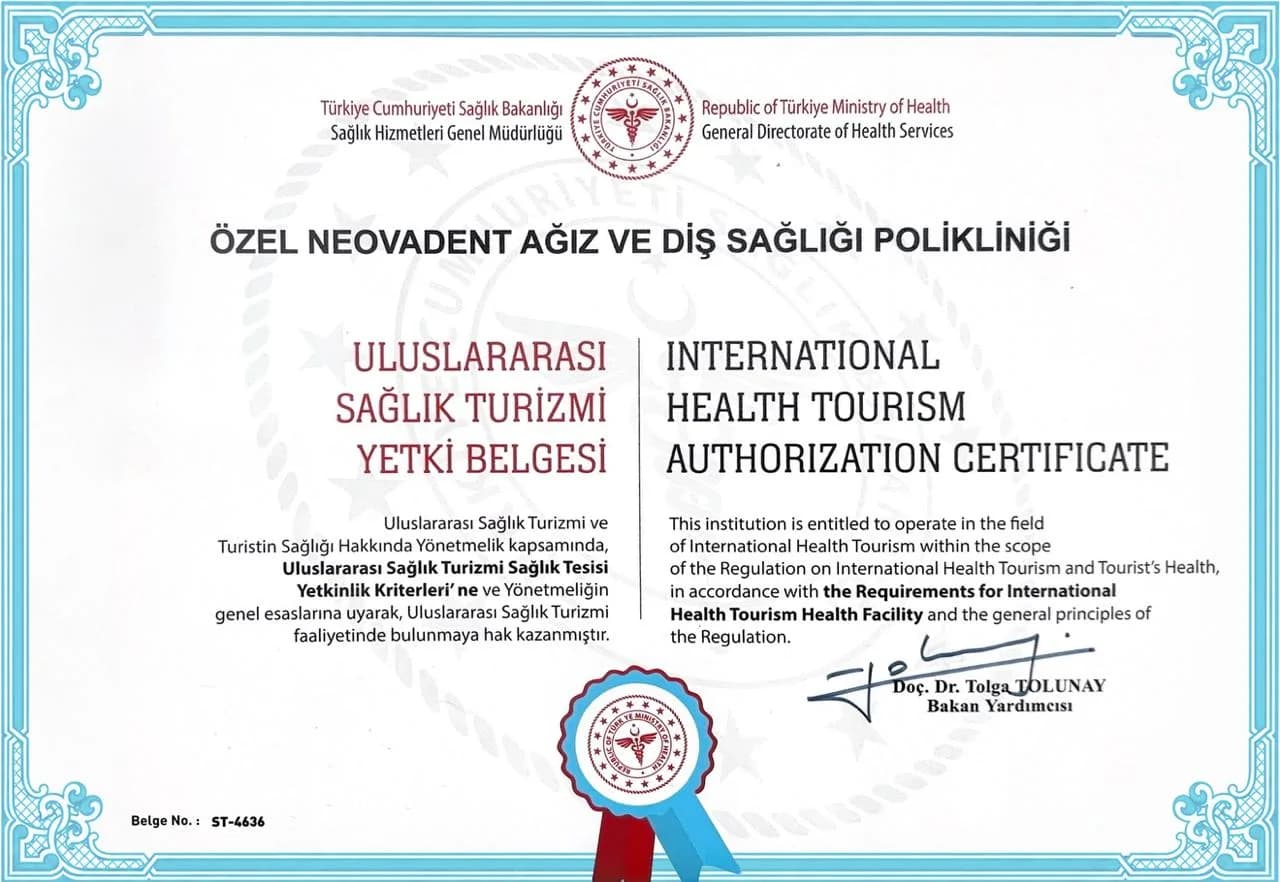
Prosthetic Dentistry
Restore missing or damaged teeth with crowns, bridges and dentures at Neovadent Dental Clinic in Kirklareli, Türkiye.
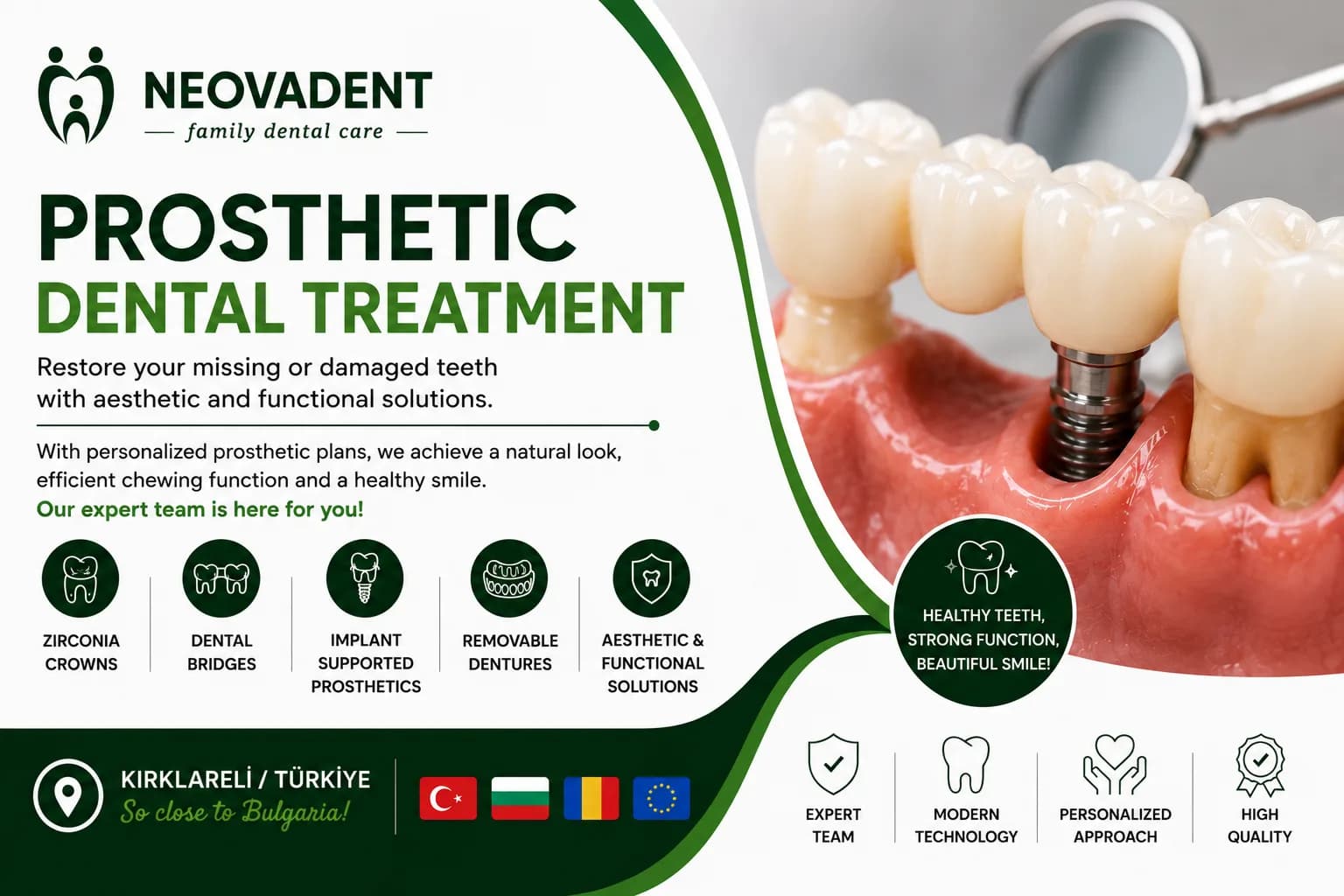
Prosthetic Dentistry
Missing teeth, severely damaged tooth structure or existing restorations that no longer provide adequate function and aesthetics can affect chewing, speech and the appearance of the smile. Prosthetic dentistry aims to restore missing teeth and damaged dental structures with appropriate restorations while helping patients regain oral function as naturally as possible.
Prosthetic treatment involves more than simply replacing missing teeth. Tooth shape, color and position, bite relationships, jaw structure, gum health and the patient's aesthetic expectations are evaluated together to create an individualized treatment plan.
At Neovadent Dental Clinic, different treatment options ranging from fixed crowns and bridges to removable dentures, implant-supported restorations and aesthetic prosthetic solutions are evaluated according to each patient's oral condition and individual needs.
Our aim is to provide personalized prosthetic solutions that consider not only aesthetic appearance but also chewing function, speaking comfort, bite relationships and harmony with the surrounding oral structures.
⭐ Highlights
📍 Location: Neovadent Dental Clinic – Kirklareli / Türkiye
🦷 Specialty: Prosthetic Dentistry
👑 Fixed Restorations: Dental crowns and bridges
🦷 Missing Tooth Solutions: Implant-supported, complete and partial dentures
✨ Aesthetic Approach: Planning according to tooth color, shape, facial features and overall smile harmony
🔎 Personalized Planning: Treatment according to oral structure, bite and the condition of existing teeth
🌍 International Patients: Convenient road access from Bulgaria and Romania
📋 What Is Prosthetic Dentistry?
Prosthetic dentistry is the branch of dentistry concerned with restoring missing teeth, severely damaged dental structures and existing restorations that have lost their function or aesthetic appearance.
The loss of one or more teeth does not simply create a visible gap. Depending on the location and number of missing teeth, chewing function may be affected, and neighboring or opposing teeth may gradually change position.
For this reason, prosthetic treatment planning involves evaluating the oral system as a whole rather than focusing only on the area of the missing tooth.
The condition of the remaining natural teeth, gums and supporting tissues, the number and location of missing teeth, jaw relationships, bite and aesthetic expectations are assessed in detail. Radiographic examinations and digital records may also be included in treatment planning when necessary.
Prosthetic restorations can generally be divided into fixed prostheses, removable prostheses and implant-supported prostheses.
Fixed restorations include crowns and bridges that are not removed by the patient. Removable prostheses include complete and partial dentures that can be inserted and removed by the patient. Implant-supported prostheses receive support from dental implants placed in the jawbone.
The appropriate prosthetic method differs for each patient. Treatment selection depends on the number of missing teeth, the condition of the remaining teeth, bone and soft tissue structure, bite relationships, individual expectations and the findings of a comprehensive oral examination.
👨⚕️ When Is Prosthetic Dental Treatment Recommended?
Prosthetic dentistry is not limited to patients who have lost all of their natural teeth. Prosthetic treatment options may be considered in a wide range of situations, from restoring a single severely damaged tooth to replacing multiple missing teeth.
A prosthetic evaluation may be recommended in situations including:
• One or more missing teeth
• Severely fractured or worn teeth
• Significant loss of tooth structure that cannot be adequately restored with a filling alone
• Existing crowns or bridges that require replacement
• Complete loss of natural teeth
• Multiple missing teeth
• Planning of the definitive restoration following dental implant treatment
• Reduced chewing function due to tooth loss
• Teeth requiring changes in shape, size or appearance through prosthetic restorations
• Old or poorly fitting removable dentures
• Bite relationships requiring comprehensive prosthetic rehabilitation
• Complex treatment plans where both function and aesthetics need to be restored
Before treatment is selected, the teeth, gums, jawbone and bite relationships should be evaluated together.
🦷 Treatments in Prosthetic Dentistry
The type of prosthetic restoration is determined according to the individual needs of each patient. Treatment options can range from restoring a single tooth to comprehensive full-mouth rehabilitation.
Zirconium Crowns
Zirconium crowns are one of the fixed restorative options that may be considered when both aesthetics and durability are important.
Their tooth-colored structure can make them suitable for areas where a natural appearance is a priority. The color, shape and size of the crown are planned according to the patient's existing teeth, facial characteristics and smile.
The suitability of the restoration is determined after evaluating the condition of the tooth and the functional forces affecting the area.
Porcelain Crowns
Porcelain-based crowns can be used to restore teeth with significant loss of tooth structure or teeth that require aesthetic reshaping.
The type of porcelain restoration is selected according to the location of the tooth, remaining dental structure, aesthetic expectations and functional requirements.
Dental Bridges
Dental bridges may be considered in suitable cases where one or more teeth are missing.
With a traditional bridge, suitable teeth on either side of the missing tooth area provide support for the fixed restoration. The periodontal condition of the supporting teeth, remaining tooth structure, length of the missing area and bite forces are evaluated during treatment planning.
Fixed Implant-Supported Prostheses
Once the necessary healing period for dental implants has been completed, individual crowns, bridges or more extensive fixed restorations can be prepared on the implants.
The position and number of implants, condition of the surrounding tissues, bite relationships and aesthetic requirements are evaluated when planning the implant-supported restoration.
Implant-Supported Removable Prostheses
For some patients with complete tooth loss, removable prostheses supported by dental implants may be considered.
In suitable cases, implant support may help improve the stability of the prosthesis compared with a conventional complete denture. The required number of implants and the type of prosthetic system are determined according to the patient's bone structure and individual treatment plan.
Complete Dentures
Complete dentures may be used when all natural teeth in the upper or lower jaw have been lost.
Jaw structure, soft tissues, the relationship between the upper and lower jaws and aesthetic characteristics are considered during planning. The color, shape and arrangement of the artificial teeth are designed to harmonize with the patient's facial features.
Removable Partial Dentures
When some natural teeth remain but a fixed bridge or implant treatment is not appropriate or preferred, removable partial dentures may be considered.
These prostheses use the remaining teeth and supporting oral structures to help restore areas where teeth are missing.
Temporary Crowns and Prostheses
Some prosthetic treatments are completed in several stages. While the definitive restoration is being prepared, temporary crowns or prostheses may be used when appropriate.
Temporary restorations can help protect prepared teeth and maintain basic function and aesthetic appearance throughout the treatment period.
Full-Mouth Prosthetic Rehabilitation
In certain cases involving multiple missing, severely worn or extensively damaged teeth, treatment may need to be planned across the entire mouth rather than focusing on a single area.
In these complex cases, natural teeth, implants, gum tissues, bite relationships and aesthetic requirements are evaluated together, and a staged full-mouth prosthetic rehabilitation plan may be prepared.
📅 Treatment Process
Prosthetic dental treatment begins with a detailed assessment of the patient's existing teeth, missing tooth areas, gums, jaw structure and bite relationships.
During the initial examination, chewing function, existing restorations and aesthetic expectations are evaluated. When necessary, radiographic images, impressions, photographs or digital records may be used to support treatment planning.
If active cavities, gum disease or other oral health problems requiring treatment are identified, the necessary procedures may be planned before proceeding with the prosthetic stage.
According to the patient's oral structure and individual needs, suitable options such as crowns, bridges, implant-supported restorations or removable dentures are evaluated. The advantages, limitations and treatment stages of the available alternatives are explained, and an individualized treatment plan is prepared.
When fixed crowns or bridges are planned, an impression or digital record is obtained after the necessary tooth preparation has been completed. Temporary restorations may be used in suitable cases while the definitive restoration is being prepared.
For implant-supported prostheses, the timing of the prosthetic stage is determined according to the condition of the implants and surrounding tissues. Once implant positions and prosthetic requirements have been evaluated, the appropriate restoration is prepared.
For complete or removable partial dentures, the process may include impressions, determination of jaw relationships and the necessary trial stages. Tooth shape, color and arrangement are planned according to aesthetic and functional requirements.
Before the definitive restoration is completed, its fit, bite, aesthetic appearance and function are checked. Any necessary adjustments are made before treatment is finalized.
Completion of prosthetic treatment does not mean the end of care. Regular examinations and effective daily oral hygiene are important for maintaining the health of the restorations, supporting teeth, implants and surrounding tissues.
⭐ Why Neovadent?
A successful prosthetic treatment aims to achieve more than simply replacing missing teeth. Aesthetics, function, bite relationships and the structures of the entire oral cavity should be considered together.
At Neovadent Dental Clinic, prosthetic treatments are planned individually according to the condition of the natural teeth, gum health, number and location of missing teeth, jaw relationships, facial characteristics and the patient's aesthetic expectations.
From a single dental crown to implant-supported restorations and comprehensive prosthetic rehabilitation, treatment options are evaluated according to individual needs. When necessary, multidisciplinary planning may include periodontal, endodontic, implant or oral surgical treatment.
In aesthetic areas, attention is given not only to the color of the restoration but also to tooth shape, size and arrangement, the relationship with the gums and overall facial harmony. In functional areas, chewing forces and bite relationships are important parts of treatment planning.
Our clinic in Kirklareli is located close to the Bulgarian border, providing convenient road access for patients travelling from Bulgaria. For patients travelling from Romania, treatment stages and required visits can be organized according to the individual treatment plan.
❓ Frequently Asked Questions
Who may benefit from prosthetic dental treatment?
Prosthetic treatment options may be considered for patients with one or more missing teeth, severely damaged teeth, existing prostheses or restorations that require replacement, or those who need dental function and aesthetics to be restored. The appropriate method is determined following a detailed examination.
What is the difference between a zirconium crown and a porcelain crown?
The materials and clinical characteristics of these restorations differ. The appropriate option depends on the location of the tooth, remaining tooth structure, aesthetic expectations and bite forces. No single material can be considered the best option for every patient.
Is a bridge or an implant better for a missing tooth?
Both treatments have different indications. The bone structure in the missing tooth area, condition of the neighboring teeth, overall oral health and the patient's expectations are evaluated before the appropriate option is selected.
When can the prosthesis be placed after dental implant treatment?
The timing of the definitive implant-supported restoration is not the same for every patient. It depends on factors such as implant integration with the bone, implant location, bone structure and any additional surgical procedures performed.
How long does it take to get used to removable dentures?
The adaptation period varies from person to person. During the initial period, patients may need time to become accustomed to speaking, chewing and the sensation of the denture in the mouth. Necessary adjustments can be made during follow-up appointments.
Can dental prostheses look natural?
The color, shape, size and arrangement of prosthetic teeth can be planned according to the patient's existing teeth and facial characteristics. The natural appearance of the final result depends on several factors, including the type of restoration, oral anatomy and individual clinical conditions.
How long do dental crowns and bridges last?
It is not possible to provide the same exact lifespan for every patient. Oral hygiene, the condition of supporting teeth, restorative material, bite forces, habits such as clenching or grinding and regular dental examinations can all influence the longevity of crowns and bridges.
How should dental prostheses be cared for?
The areas around fixed crowns, bridges and implant-supported restorations should be cleaned regularly. In addition to tooth brushing, dental floss or appropriate interdental cleaning aids may be recommended depending on the type of restoration. Removable dentures should be cleaned regularly according to the dentist's instructions. Routine examinations are also an important part of long-term care.
🔗 Related Services
• Dental Implants
• Periodontology
• Endodontics
• Oral and Maxillofacial Surgery
• Restorative Dentistry
• Oral and Maxillofacial Radiology
📞 Contact Us
If you would like to replace missing teeth, have your existing crowns or dentures evaluated, or create a prosthetic treatment plan that considers both aesthetics and function, you can contact Neovadent Dental Clinic.
Following a detailed examination, your existing teeth, missing tooth areas, jaw structure, bite and expectations can be evaluated together to determine prosthetic treatment options suited to your individual needs.
Other services
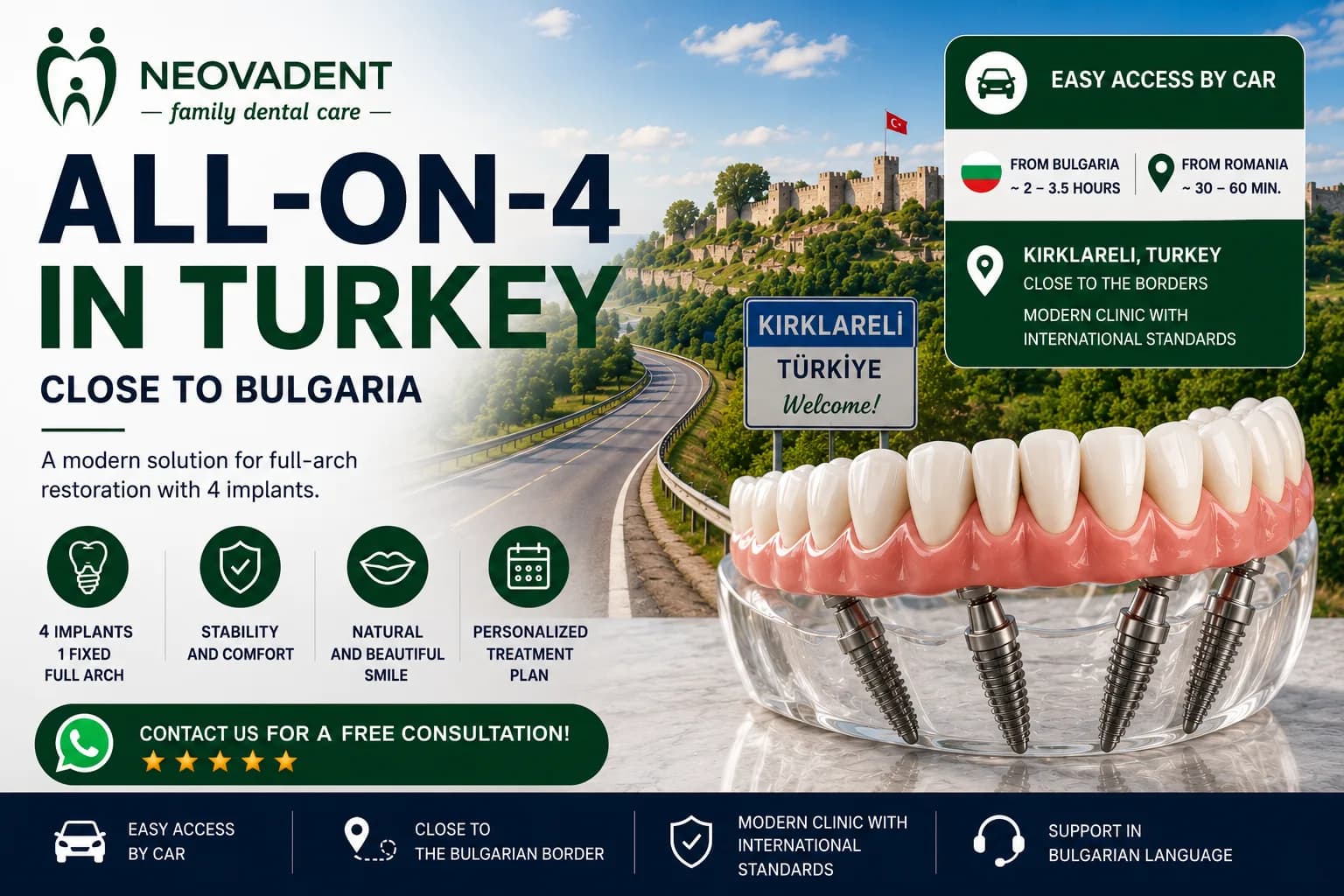
All-on-4 in Turkey | Near Bulgaria & Romania | Neovadent
Discover All-on-4 treatment in Turkey at Neovadent, Kırklareli. Modern digital dentistry, personalized treatment plans, and convenient access from Bulgaria and Romania.

Dental Implants in Turkey Near Bulgaria | Neovadent
Looking for dental implants in Turkey? Neovadent offers modern implant treatments in Kırklareli with convenient access from Bulgaria and Romania.
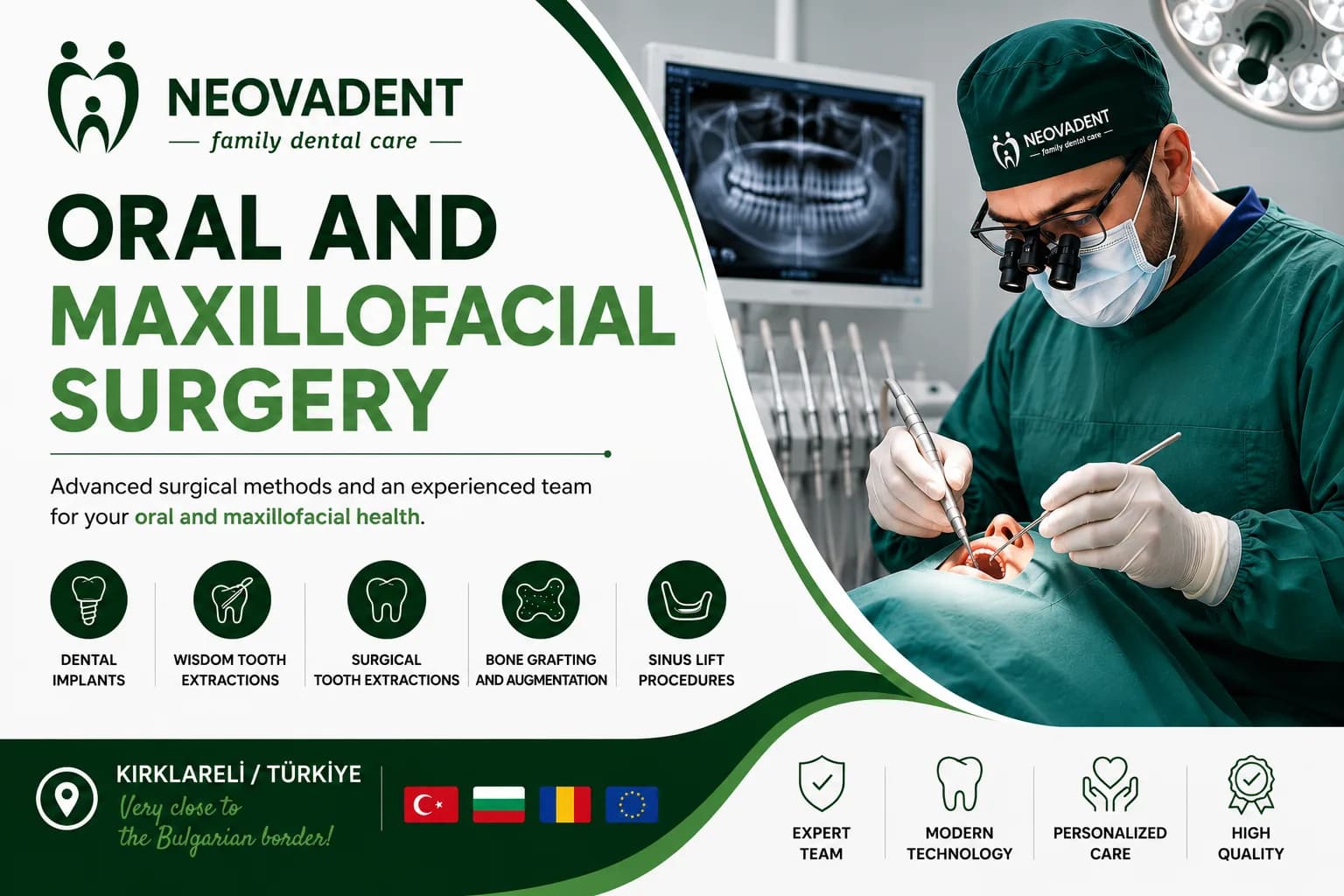
Oral and Maxillofacial Surgery
Oral surgery, dental implants and impacted wisdom tooth removal at Neovadent in Kırklareli, Turkey. Individual treatment planning for every patient.